31 Jul 2026 / Subhashish Homes
Your home came with a price you agreed to and a price you discover slowly.
The first one sits in the sale deed. The second arrives in installments, through the electricity bill, the water tanker, the monthly maintenance charge and the figure you finally settle for on the day you sell.
Here is the part that stings. Certified green homes in India run on twenty to thirty percent less energy and thirty to fifty percent less water than conventional buildings, according to the Indian Green Building Council. Turn that around and you have the running cost of an ordinary community, paid quietly, month after month, for as long as you live there.
It hides in plain sight, because it arrives looking like a perfectly normal bill.
This blog will show you the hidden costs of traditional housing across three fronts: the bills you can count, the comfort you feel daily, and the value waiting for you at resale. By the end, you will know exactly what to ask before you sign.
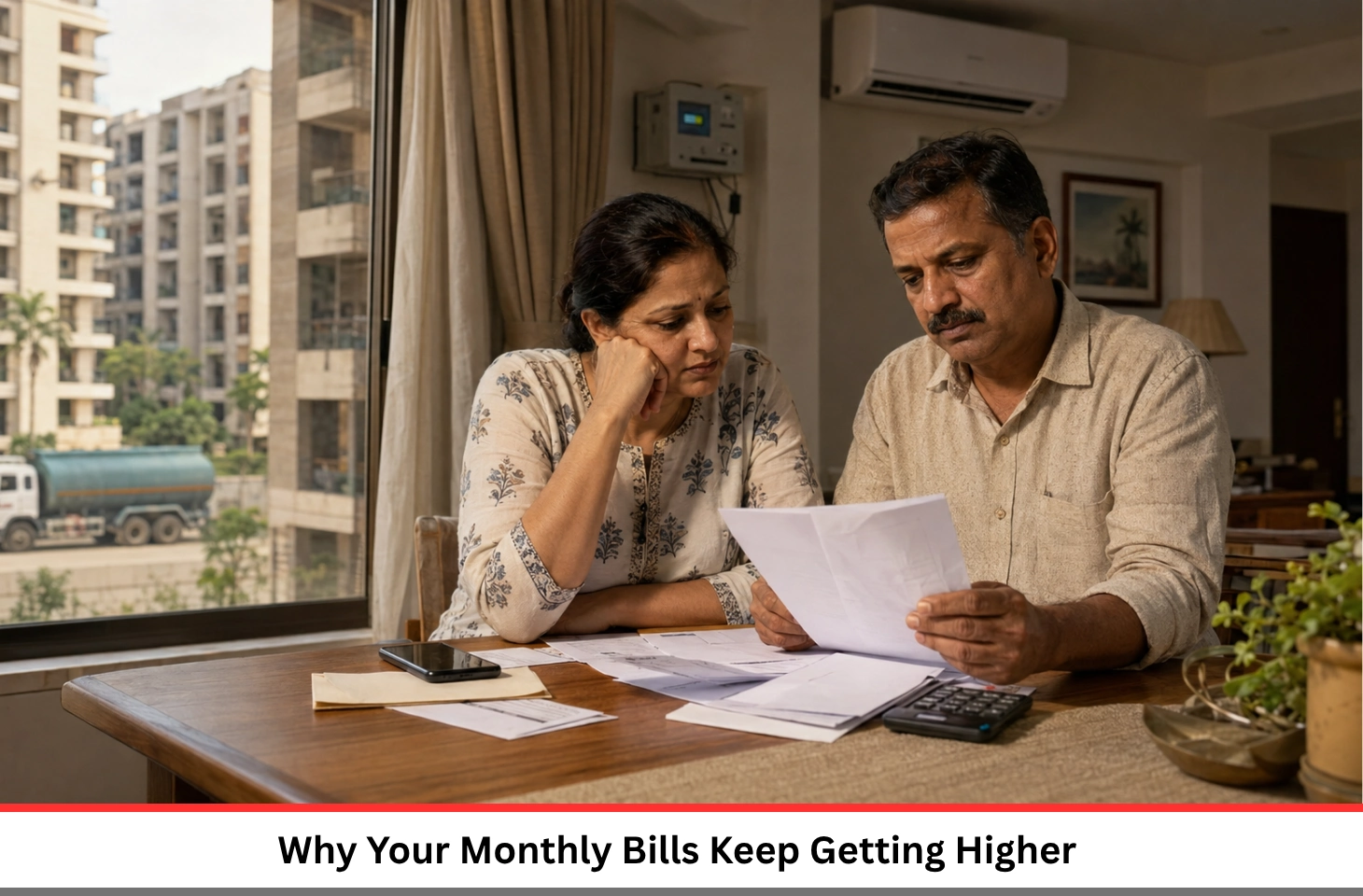
Those savings figures come from independent assessment rather than marketing, which makes them a useful yardstick. Broader industry analysis widens the picture further, placing total operational savings for owners between twenty and thirty-five percent once durability and upkeep enter the calculation. Three separate line items drive that difference, and each one behaves in its own way.
Building design decides much of your electricity bill long before you choose an air conditioner. A structure oriented to catch the afternoon sun, wrapped in thin walls and fitted with single glazing, absorbs heat all day and releases it into your rooms all evening. The cooling system then works overtime to undo what the architecture created, and in a Rajasthan summer it works very hard indeed.
Efficient alternatives change that equation at the source. Careful orientation, quality glazing, insulated envelopes, LED lighting and rooftop solar together cut consumption sharply. Analysts tracking certified projects report electricity reductions of thirty to fifty percent in well-executed cases, with better insulation alone trimming cooling loads by a quarter or more. Every unit saved is a unit you keep paying for elsewhere.
In a semi-arid city, water carries its own economics. Communities designed around harvesting, recharge and treated-water reuse for landscaping draw far less from the municipal line and the borewell alike. Buildings that skip those systems make up the shortfall by purchase, and tanker rates climb precisely when demand peaks.
Across a decade, that dependency accumulates into a substantial figure, and it arrives alongside the electricity used to pump, store and lift every litre.
Also Read: How Much Water Does a Jaipur Family Really Use Every Year?
The third line item hides in plain sight. Durable materials, quality fittings and well-specified systems last longer and fail less often, which shows up as lower annual maintenance across the life of the building. Cheaper specifications ask for repainting sooner, replacement plumbing earlier and repair visits more frequently, and in a shared community those costs travel straight into the monthly maintenance charge every resident pays.
This is why sustainable infrastructure deserves attention during a site visit rather than after possession. Pipes, pumps, treatment plants and electrical systems are difficult to upgrade once a community is occupied, so the specification chosen at construction sets the cost structure for everyone who lives there afterwards.
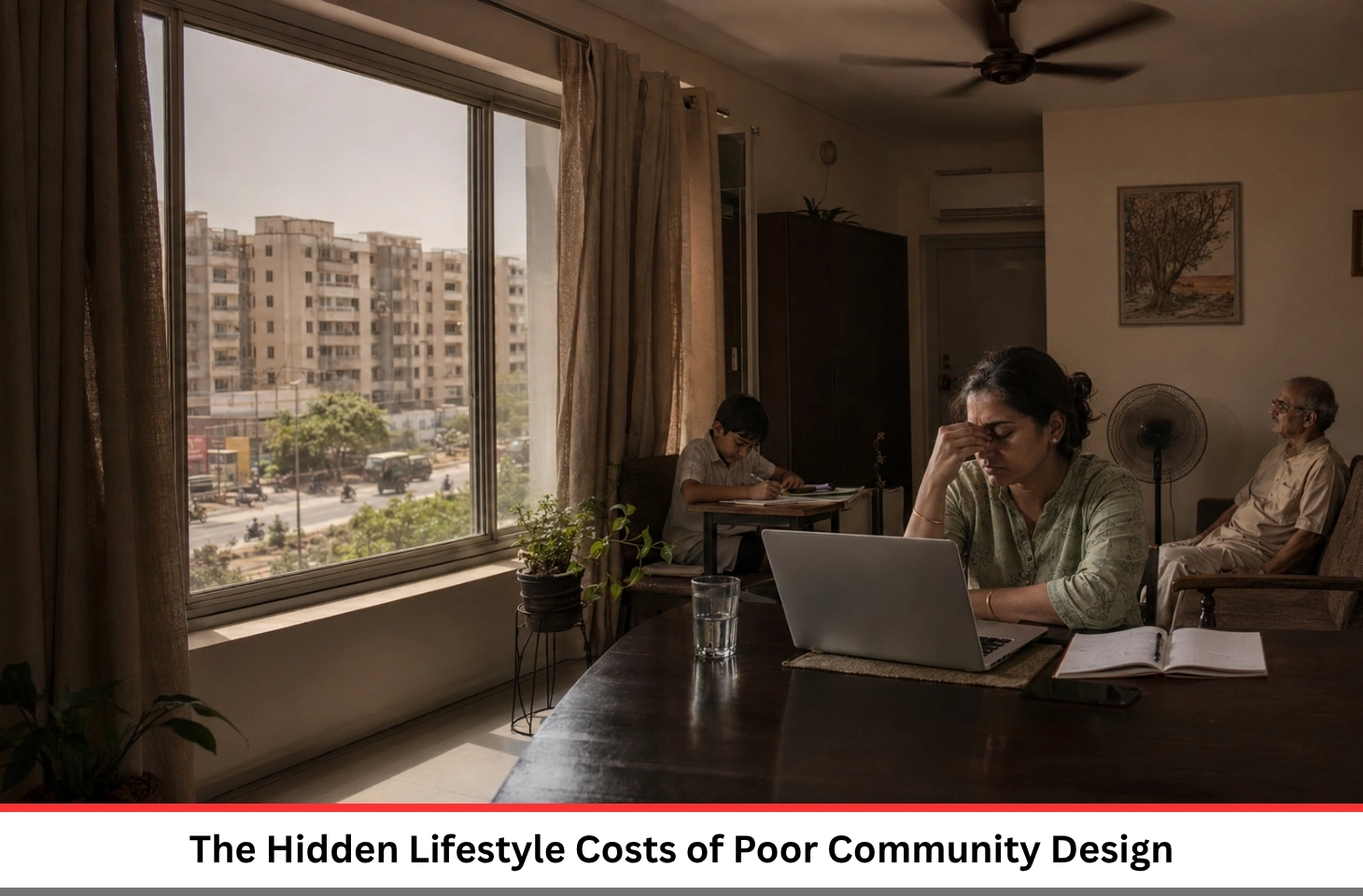
Some expenses arrive as discomfort long before they arrive as an invoice, and residents tend to absorb them for years.
Indoor air quality follows directly from material and ventilation choices. Low-VOC paints, adhesives and finishes keep the air cleaner from the first day of occupancy, and planned cross-ventilation keeps it moving. Certified projects treat both as requirements rather than preferences, and research consistently links better indoor environments to sharper focus, steadier sleep and fewer sick days.
Households in buildings specified for cost alone tend to compensate later, through air purifiers, extra medical visits and the general fatigue that comes from breathing stale air at home. These costs land on the family budget while remaining entirely absent from the property brochure.
Comfort behaves the same way. Generous daylight lowers the electricity bill and lifts the mood of a home at once. Tree cover across a community moderates temperatures measurably, keeping shaded ground several degrees cooler than exposed concrete and paving. Green cover also absorbs sound, filters dust and gives children somewhere safe to run.
Developments built to maximise saleable area treat landscaping as leftover space, and residents feel that decision through hotter afternoons, glaring interiors and a constant hum from the street. The environmental housing impact of those choices reaches the household budget through cooling costs and reaches daily life through simple, persistent discomfort.
Put these threads together and a pattern emerges. Air, temperature, daylight, noise and green space shape how a family sleeps, works and recovers across years of occupancy. Buyers weighing the benefits of sustainable communities often start with utility bills and end up valuing this second category more, because it touches every hour spent at home rather than only the monthly statement.
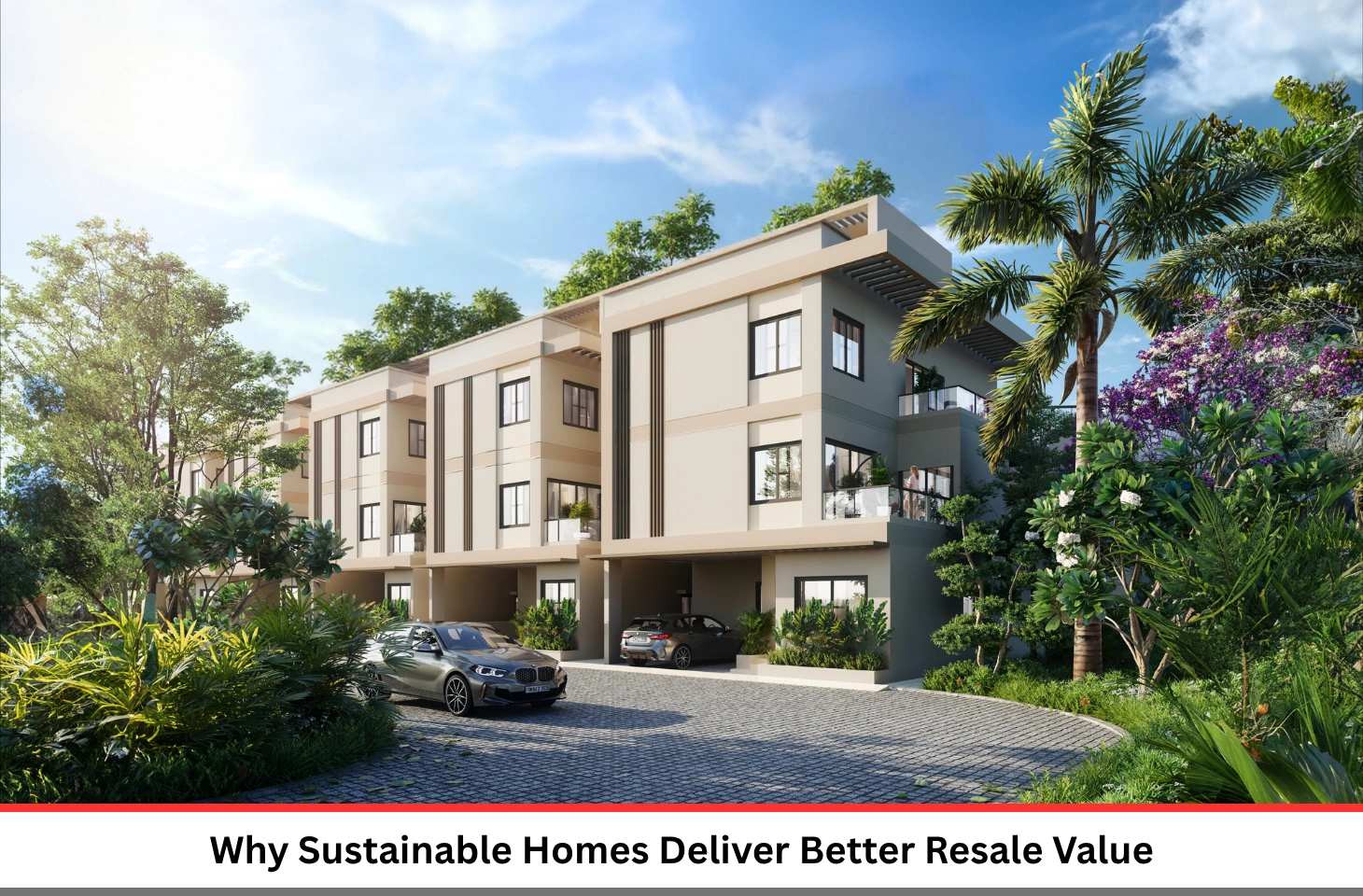
The final expense stays dormant for years, then arrives all at once.
Green-certified properties in India command a premium of roughly five to fifteen percent in rental and resale values, according to industry analysis. Certification also signals lower running costs to the next buyer, which shortens the time a listing spends on the market. Uncertified homes compete against this standard, and the difference shows up in the final negotiated figure.
Construction economics support the case as well. An IGBC-certified green home typically costs three to eight percent more to build, and operational savings recover that premium within five to eight years for residential projects. Given that most families hold a home far longer, the arithmetic favours efficiency comfortably across a full ownership cycle.
Policy adds momentum to the same trend. Rooftop rainwater harvesting is already mandatory for buildings above specified plot sizes across urban Rajasthan, groundwater extraction now sits under formal state regulation, and several Indian cities offer property tax rebates and additional FAR for certified green projects. Each fresh rule raises the baseline that older stock is measured against, and buyers increasingly price that gap into their offers.
For anyone comparing eco-friendly residential projects with conventional ones today, this direction of travel matters. A home built beyond the current standard stays comfortable and compliant as expectations rise around it.
These calculations shape the way we plan at The House of Shubhashish. Rainwater harvesting and recharge, sewage treatment with reuse for landscaping, solar-powered common area essentials, efficient fittings, generous tree cover and climate-appropriate planting form part of how our communities are designed rather than an upgrade offered at extra cost. Shubhashish Geeta holds the IGBC Platinum rating, the highest tier of green certification in India, awarded after independent assessment of energy, water, materials, site planning and indoor environmental quality. The same principles guide how we approach our other communities across Jaipur.
Our reasoning is straightforward. Residents live with these systems for decades, so the value of sustainable housing compounds quietly through lower bills, healthier interiors and an asset that holds its standing as the market matures. Building this way costs more upfront and repays the household many times over.
Choosing sustainable community living is ultimately a financial decision as much as an environmental one, and it rewards the buyer who asks the right questions early.
Reach out to our team, and let us show you the systems behind the promise.

 Enquiry
 Call
Call Whatsapp
 Contact us