29 Sep 2026 / Subhashish Homes

Do you struggle to get comfortable at night even when you are tired? Perhaps your bedroom stays warm long after sunset, conversations carry through from the living room, or a light outside the window keeps the room bright. These problems can make rest difficult, and their causes often lie in the design of the home.
This blog explores how home design affects rest and the design choices that can help create a more comfortable setting for sleep.
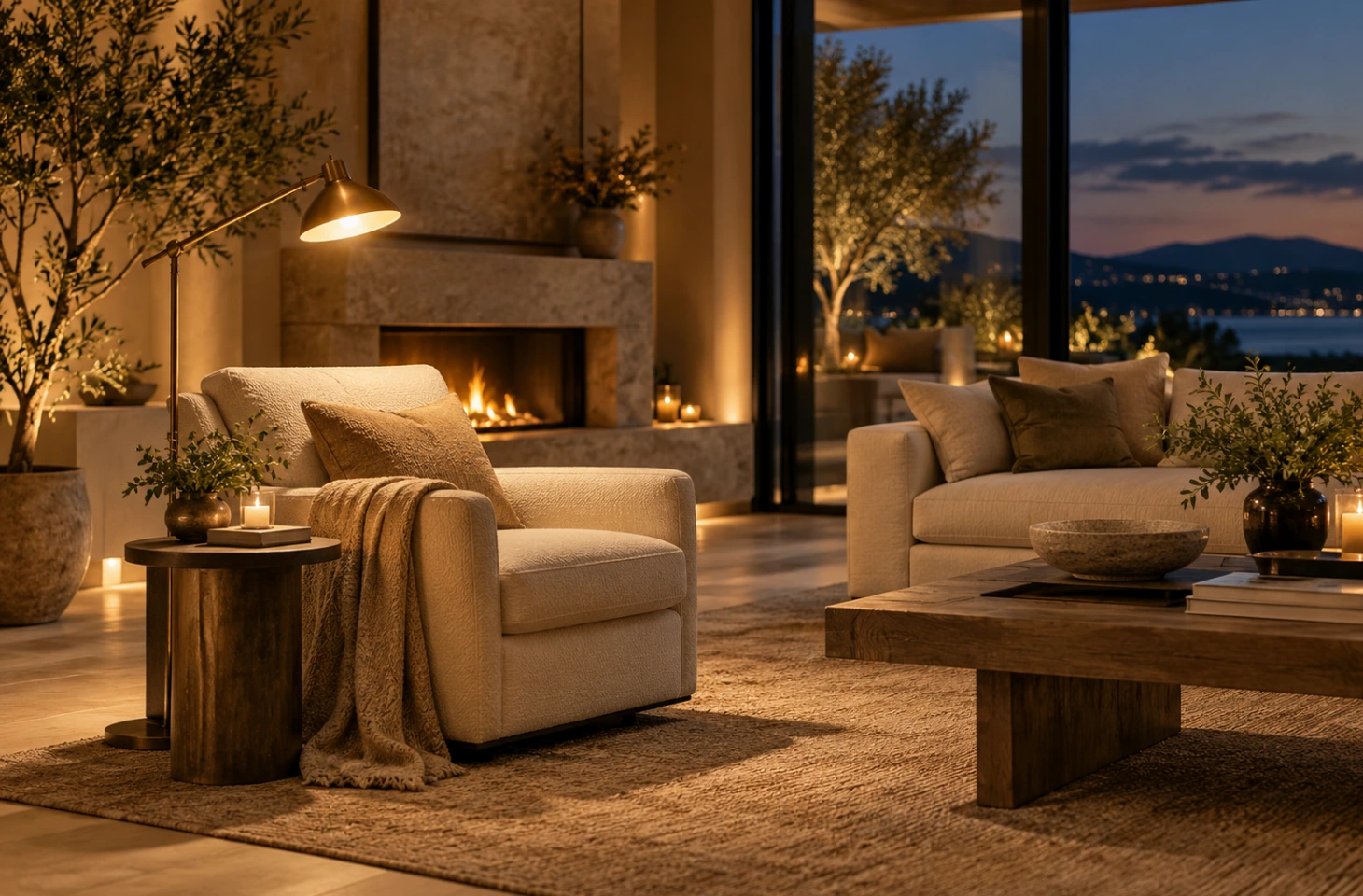
When bedrooms sit directly beside the busiest parts of a home, everyday activity can continue to demand your attention. A late dinner, a television programme or someone arriving home may be easily heard from the bed. Even with the bedroom door closed, the room can feel closely connected to everything happening outside it.
Greater separation between shared living areas and bedrooms gives family members more privacy. A passage or dressing area can create useful distance, while suitable walls and doors help limit sound transmission. This is particularly valuable in households where grandparents sleep early and younger family members stay up later.
The best bedroom location for peaceful sleep consequently depends on the surrounding rooms and how your family uses them. A generous floor area is valuable, but its position within the home deserves equal attention.
It is difficult to relax in a room that requires constant adjustment. A sofa may look inviting but offer little support. A chair might sit beneath a glaring light, while a crowded layout leaves insufficient room to stretch your legs.
When furniture suits the room and the people using it, spending time there becomes more comfortable. A supportive armchair with a nearby reading surface gives you somewhere to enjoy a book before bed. Seating arranged for conversation allows the family to spend time together without everyone having to face the television.
This is a practical aspect of wellness home design: providing spaces where you can comfortably spend the quieter part of your evening. Their usefulness depends on how naturally they fit into everyday life.
A home office that remains visible from the sofa or bed can keep unfinished tasks in view. You may have stopped working, yet your surroundings still contain reminders of the next email or presentation.
A separate study allows those reminders to remain in another room. Where the workspace forms part of a larger living area, an alcove or closable cabinet can provide some separation. The design gives work a defined place within the home, making it easier to put it away at the end of the day.
Storage supports this distinction. When paperwork and devices have an accessible home, clearing them away becomes a simple task. The room can then return to its evening use without requiring a complete rearrangement.
Rest also depends on whether you feel comfortable using a space without being overlooked or interrupted. A living room facing neighbouring windows may remain behind closed curtains, while an exposed balcony can feel too public for a quiet evening outside.
Window positioning, appropriate screening and the relationship between neighbouring homes all influence this experience. A shaded balcony with adequate privacy offers a usable place to sit after dinner. Within the home, a bedroom entrance set away from the main seating area allows greater separation when guests visit.
These details are relevant when considering luxury homes in Jaipur. Privacy needs to work both inside the residence and at its boundaries, so that the spaces intended for relaxation feel comfortable to occupy.
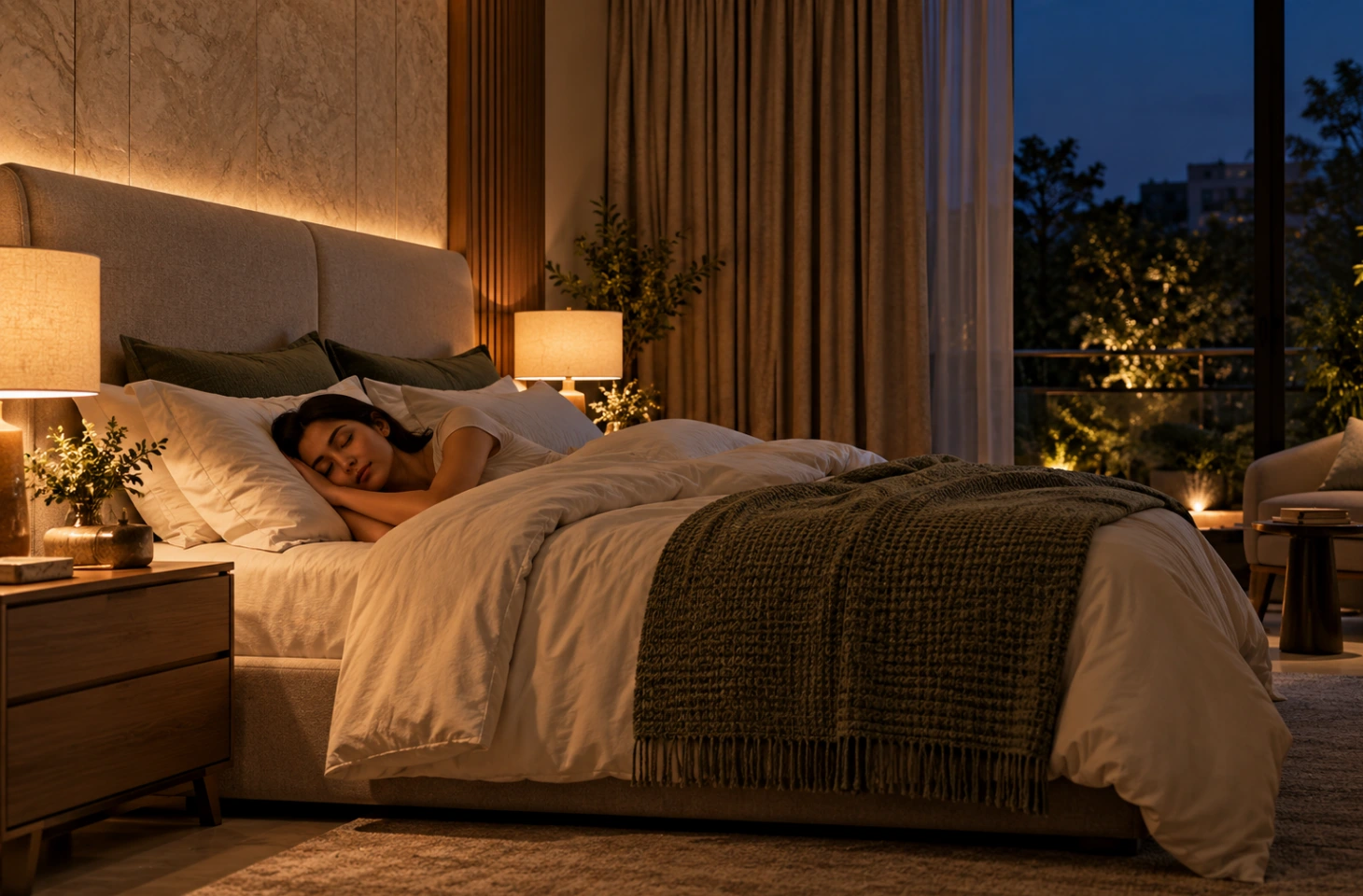
Quiet bedroom design begins with the building itself. Noise can enter through gaps around windows and doors, travel through adjoining walls or come from equipment close to the room. Each route requires attention if the bedroom is to provide meaningful separation from its surroundings.
Well-fitted window frames and suitable glazing are worth considering together, because glass alone does not determine the result. Similarly, the wall behind a headboard deserves attention if it adjoins another household’s living room or a busy service area.
Soft furnishings can reduce echoes within the bedroom, but they serve a different purpose from construction intended to limit incoming noise. In a premium home, acoustic detailing deserves the same careful consideration as visible finishes.
A bedroom works better when its lighting can serve different needs independently. Ceiling lights provide general illumination, while a focused bedside lamp allows reading without lighting up the other pillow. Separate controls give each person more flexibility in a shared room.
Dimmer-compatible fittings can also provide lower light levels when full brightness is unnecessary. Along the route to the bathroom, a discreet low-level fitting can make movement easier without requiring the main lights to be switched on.
For darkness at bedtime, the curtain arrangement matters as much as the fabric. A blackout lining needs adequate coverage around the window, with enough overlap to limit light at the edges. Planning the track and curtain recess early helps this system fit neatly into the room.
Materials matter most where you come into contact with them. A headboard should feel comfortable when you sit up to read, and bedding should suit your preferences and the season. Decorative layers become less useful if they need removing every night before the bed feels comfortable.
Colour choices are similarly personal. Muted greens, warm neutrals or softer blues may appeal to you, but no single shade guarantees better sleep. A coordinated palette can keep the room visually consistent without requiring every surface to look the same.
Finishes should also work with the lighting. A glossy surface opposite a bedside lamp may produce an unwanted reflection, whereas a matte finish may be more comfortable in that position. These choices make a sleep-friendly bedroom easier to use at night.
Also Read: The Sensory Palette: Why Neutral Tones and Raw Textures are the New Visual Language of Luxury
The most useful features of a sleep-friendly luxury home often become apparent during ordinary routines. A drawer within reach provides somewhere for reading glasses. A clear route beside the bed allows someone to get up without squeezing around furniture. Quiet wardrobe fittings reduce disturbance when one person gets ready early.
These details depend on adequate space and sensible positioning. A large bed can make a room less comfortable if it leaves little clearance for movement or prevents drawers from opening fully.
For anyone considering how to design a home for better sleep, the bedroom layout should accommodate both rest and the actions surrounding it. Enough room to move, put belongings away and adjust lighting makes bedtime easier for everyone sharing the space.
When choosing between healthy luxury homes, consider how each residence would support your family’s evenings. The arrangement of rooms and opportunities for privacy deserve attention alongside the spaces available for leisure. Together, they help you assess whether the home suits the way you want to live.
At The House of Shubhashish, we invite you to explore premium residential settings with space for relaxation and a connection with nature. At Shubhashish Forest, villas without common walls, a Central Woodland Park and a Holistic Health Club offer tangible features to consider in your search for wellness-focused homes.
Discover our residential projects and arrange a visit to experience the setting for yourself. Our team can help you explore the available layouts and discuss the features that matter to your family.
To learn more or book your visit, contact The House of Shubhashish on +91 7413 99 33 99.

 Enquiry
 Call
Call Whatsapp
 Contact us