14 Jul 2026 / Subhashish Homes
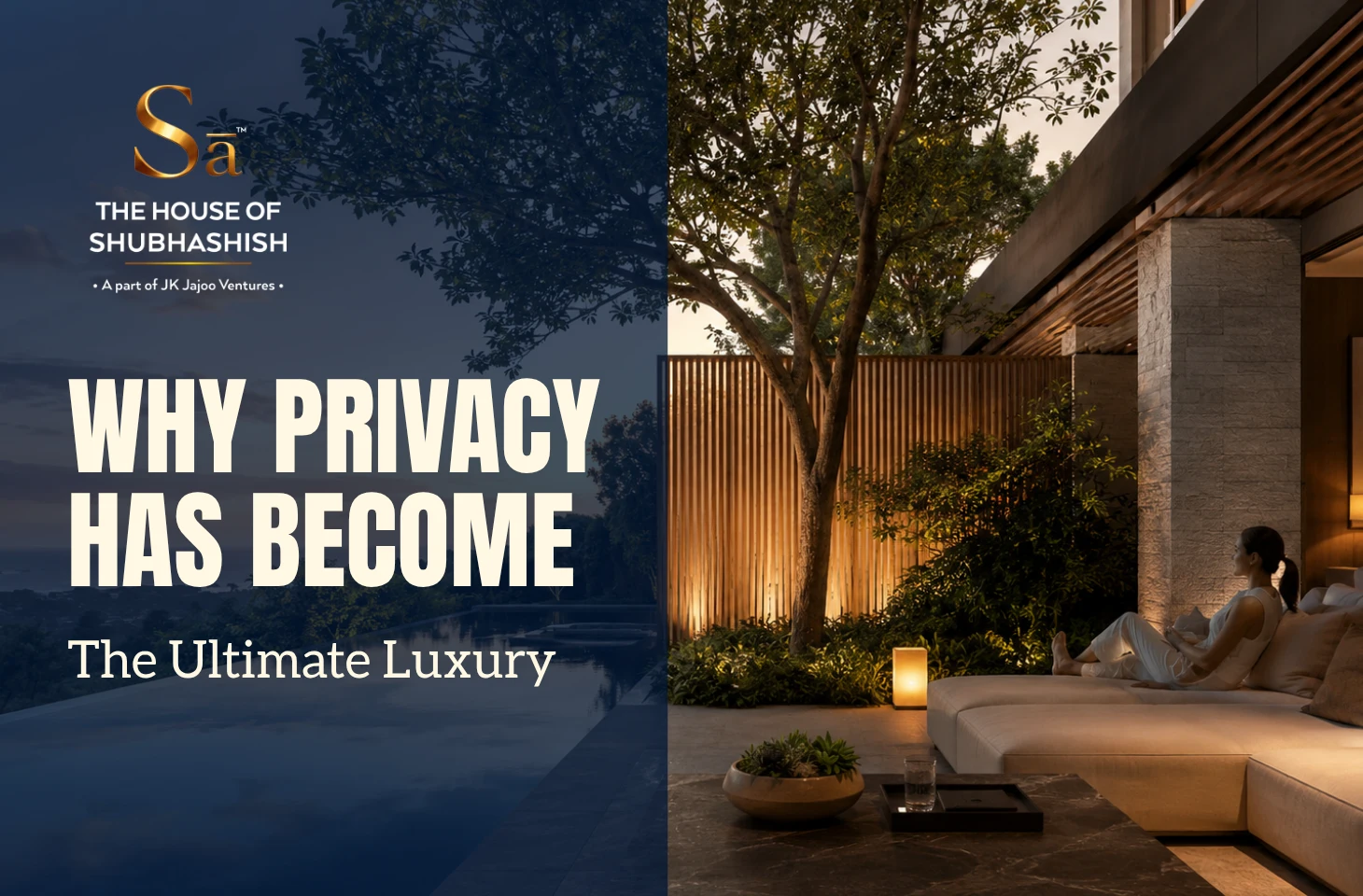
Stand on your balcony at seven in the evening. Count the sounds. Traffic, construction, a neighbour’s television, someone’s pressure cooker two floors up. Now, imagine paying several crores for that soundtrack.
India’s wealthiest homebuyers have run this exact calculation, and the answer is reshaping the real estate market. Marble, chandeliers and imported fittings have become table stakes, easy to buy and easier to copy. What money struggles to purchase in a city of millions is distance: from the noise, the crowds, and the constant gaze. That scarcity has quietly promoted privacy to the top of the luxury pyramid, and this piece explains how it happened, what it means for luxury living in India, and how a discerning buyer should respond.
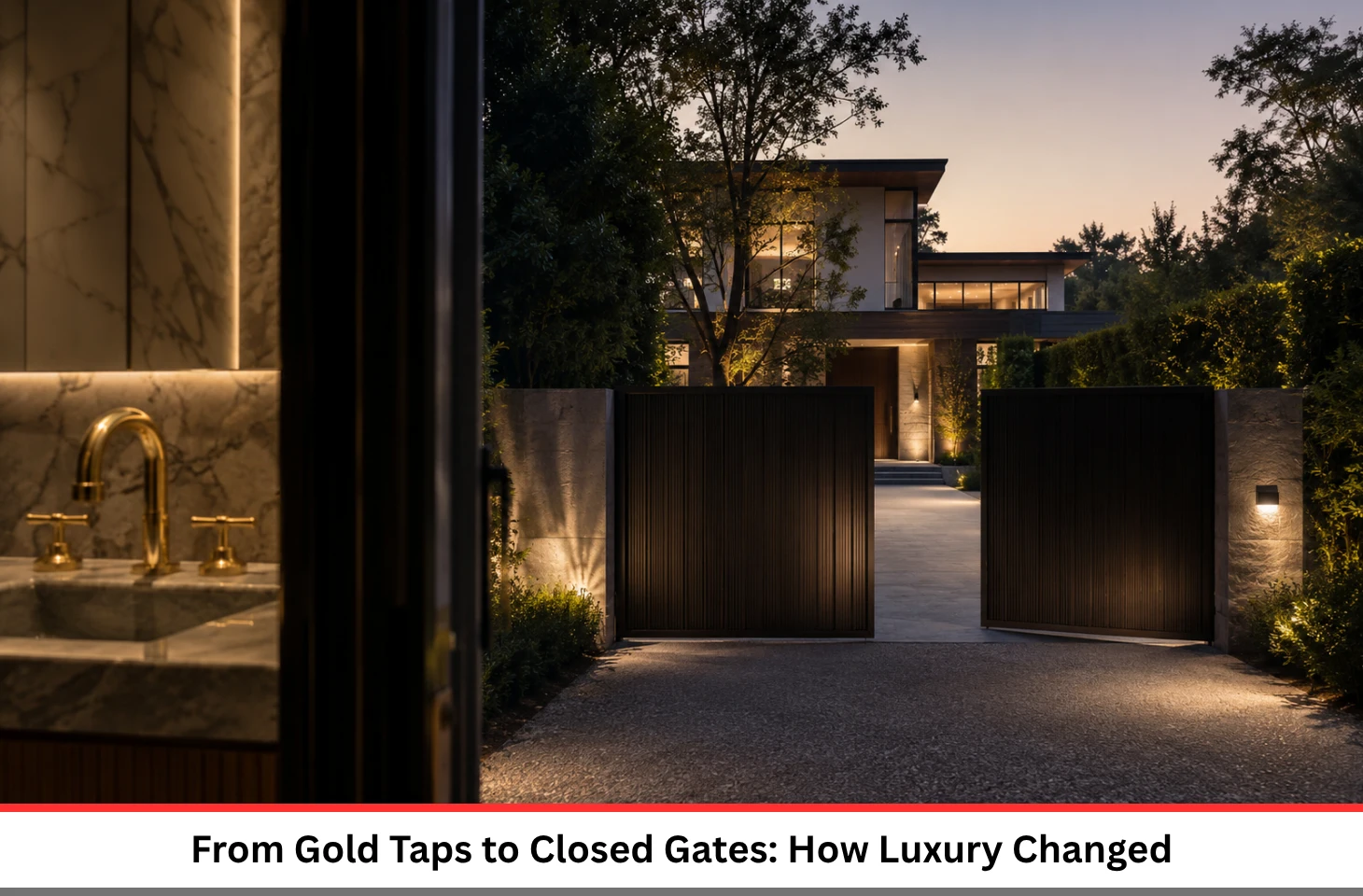
For decades, premium housing in India spoke the language of ornament. A grand lobby, a double-height ceiling, a brand-name modular kitchen: a visual checklist defined the category.
Then, the definition moved.
While overall housing volumes have cooled slightly in recent quarters, the capital invested at the top end continues to surge. The translation? Buyers are consolidating their wealth into fewer, but far superior, properties. Recent 2026 luxury market outlooks trace this behavioral shift perfectly. Affluent buyers are no longer asking for sheer scale or speculative upside. Instead, they rank absolute privacy, spatial design, and wellness as their highest priorities.
A new generation of wealth explains part of the story. Startup founders, senior professionals, and next-generation entrepreneurs treat a residence as a store of permanence—an anchor in lives that otherwise run on volatility. For them, a luxury home is no longer a trophy to show off; it is a sanctuary. And a sanctuary, by definition, keeps the world at a respectful distance.
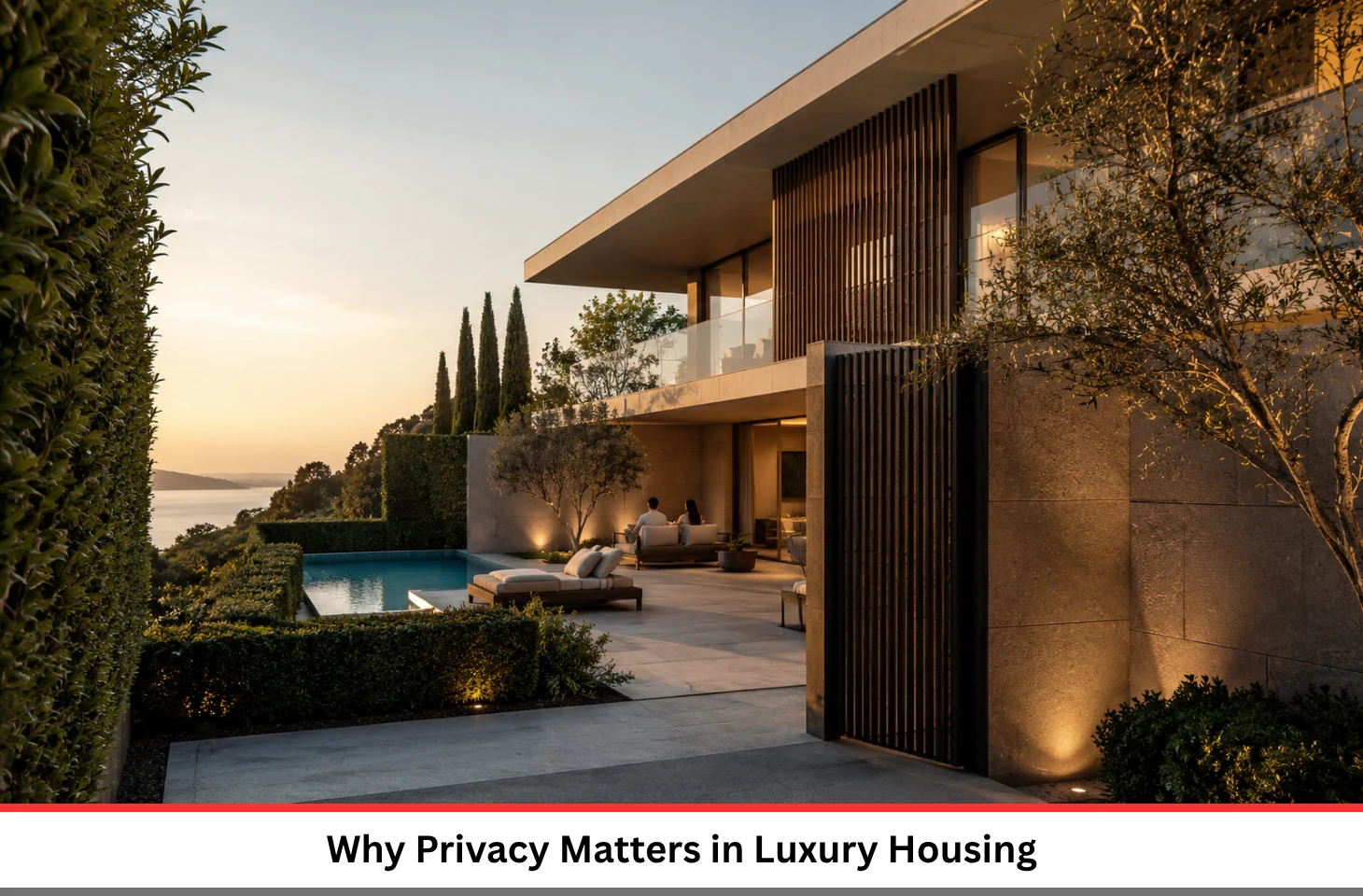
Ask why privacy matters in luxury housing and the honest answer begins outside real estate altogether. The average urban professional spends the day performing: on calls, on camera, on social media, in open-plan offices. Home is the last venue where a person can simply exist. When work followed us home after 2020, that refuge shrank, and buyers felt the loss keenly.
Density made it worse. India's biggest cities keep absorbing millions of new residents, stacking households closer with every tower. Shared walls carry conversations. Shared lifts carry strangers. Shared corridors carry everything else. Against this backdrop, silence, spacing and control over who enters your world stopped being preferences and became the product itself.
Psychologists have a phrase for what a private home restores: attention recovery. Green views, low noise and predictable surroundings measurably lower stress and sharpen focus. The wealthy figured this out early, which is why roughly 60 percent of luxury buyers in recent industry studies specifically seek privacy-focused layouts alongside wellness and automation features.
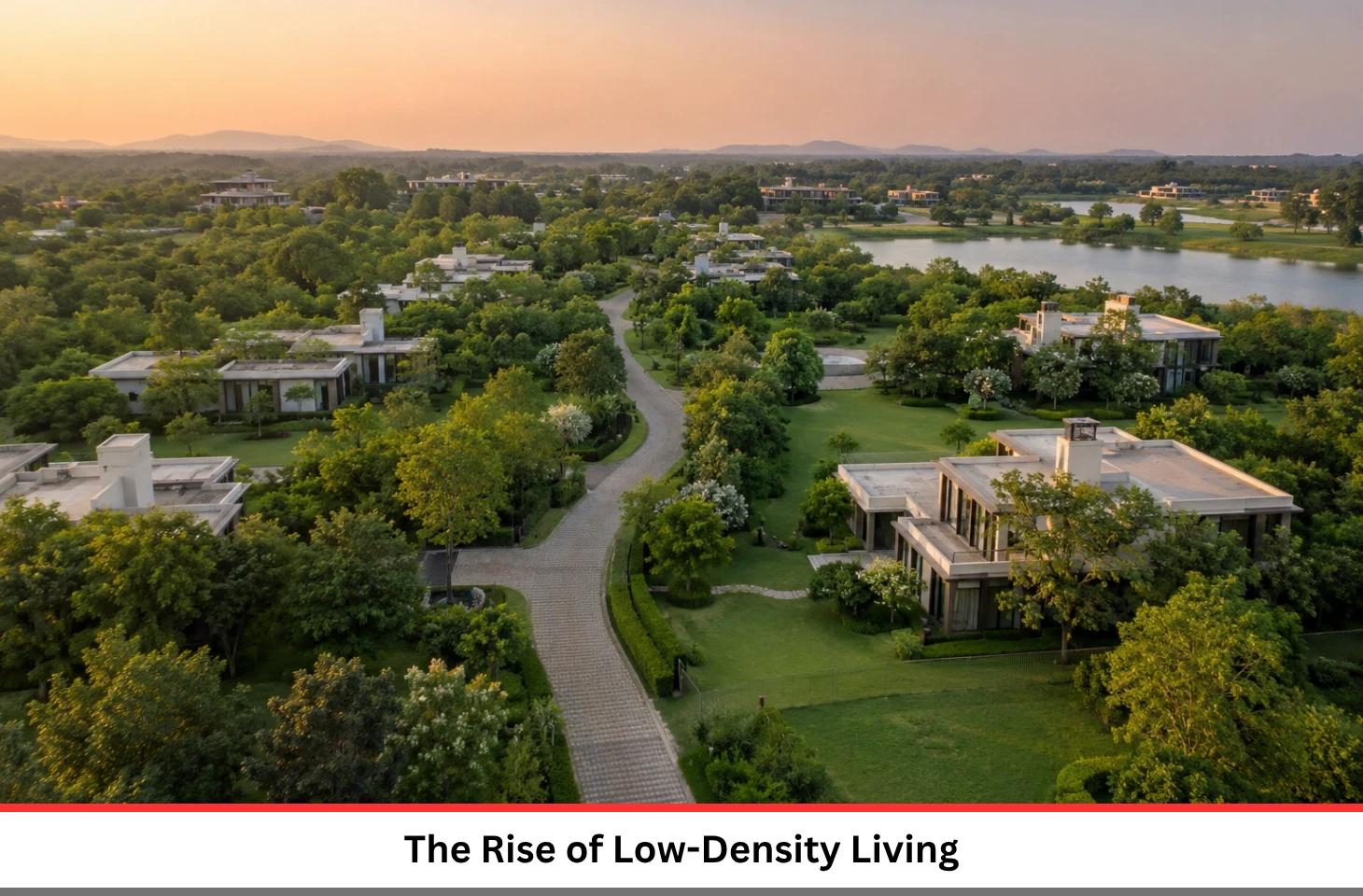
The phrase gets used loosely, so here is the working definition the premium market follows. True low-density living typically means two to four homes per acre instead of the forty or more a high-rise packs into the same land, with 70 to 75 percent of the parcel surrendered to greenery, water bodies and open recreation. Fewer households share every road, every park and every sightline. The arithmetic of crowding simply reverses.
The benefits of low-density communities compound in daily life. Cleaner air, since vegetation outnumbers vehicles. Genuine quiet, since your nearest neighbour lives across a garden rather than across a wall. Safer streets for children, since traffic inside the gates stays sparse and slow. Stronger social bonds, oddly enough, because a community of eighty families knows itself in a way a complex of eight hundred struggles to match.
The financial case rides alongside the lifestyle one. Land-heavy formats resist commoditisation: a developer can always build another tower, yet assembling twenty open acres near a growing city gets harder every year. Scarcity of true low-rise supply, paired with swelling demand from HNIs and NRIs, keeps this segment appreciating steadily across India's top markets.
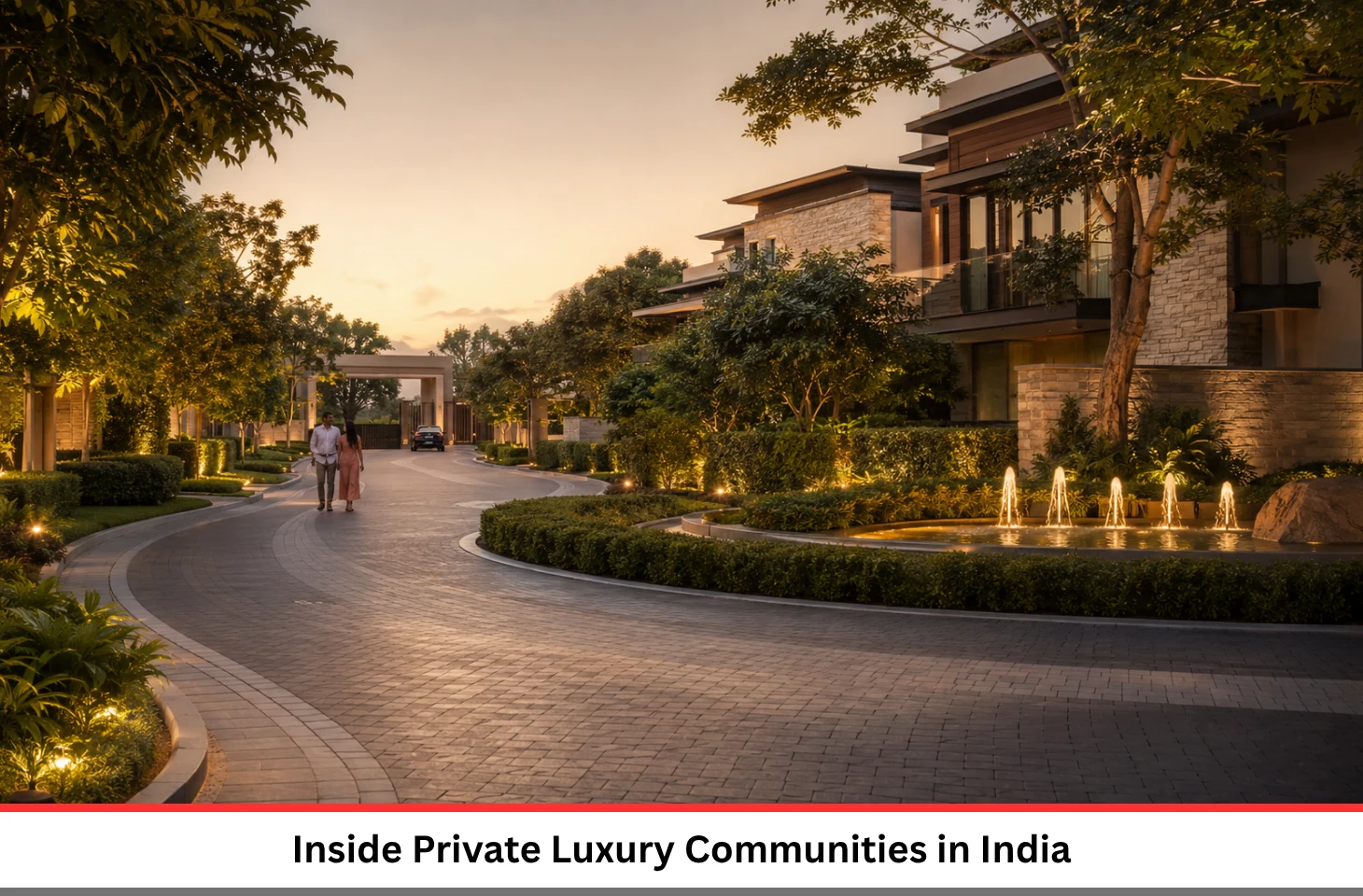
Walk through the gates of the best private luxury communities in India and the design philosophy announces itself before any amenity does. Homes sit apart, oriented for seclusion rather than symmetry. Landscaping works as architecture, using trees and levels to screen each residence from the next. Clubhouses, pools and trails serve residents alone, so leisure arrives free of queues and strangers.
Security completes the promise. Modern private communities layer their protection: perimeter surveillance, controlled entry, patrols and smart access working in concert, so vigilance stays invisible and life inside feels effortless rather than guarded. Add concierge-style maintenance and the resident's mental load drops to nearly zero, which, for a certain kind of buyer, is the entire point.
Demand keeps broadening. NRIs now contribute close to a fifth of luxury segment investment in India, drawn by exactly this format: a secure, self-managed estate that thrives even when the owner lives ten time zones away. Exclusive communities answer their brief better than any city-centre tower can.
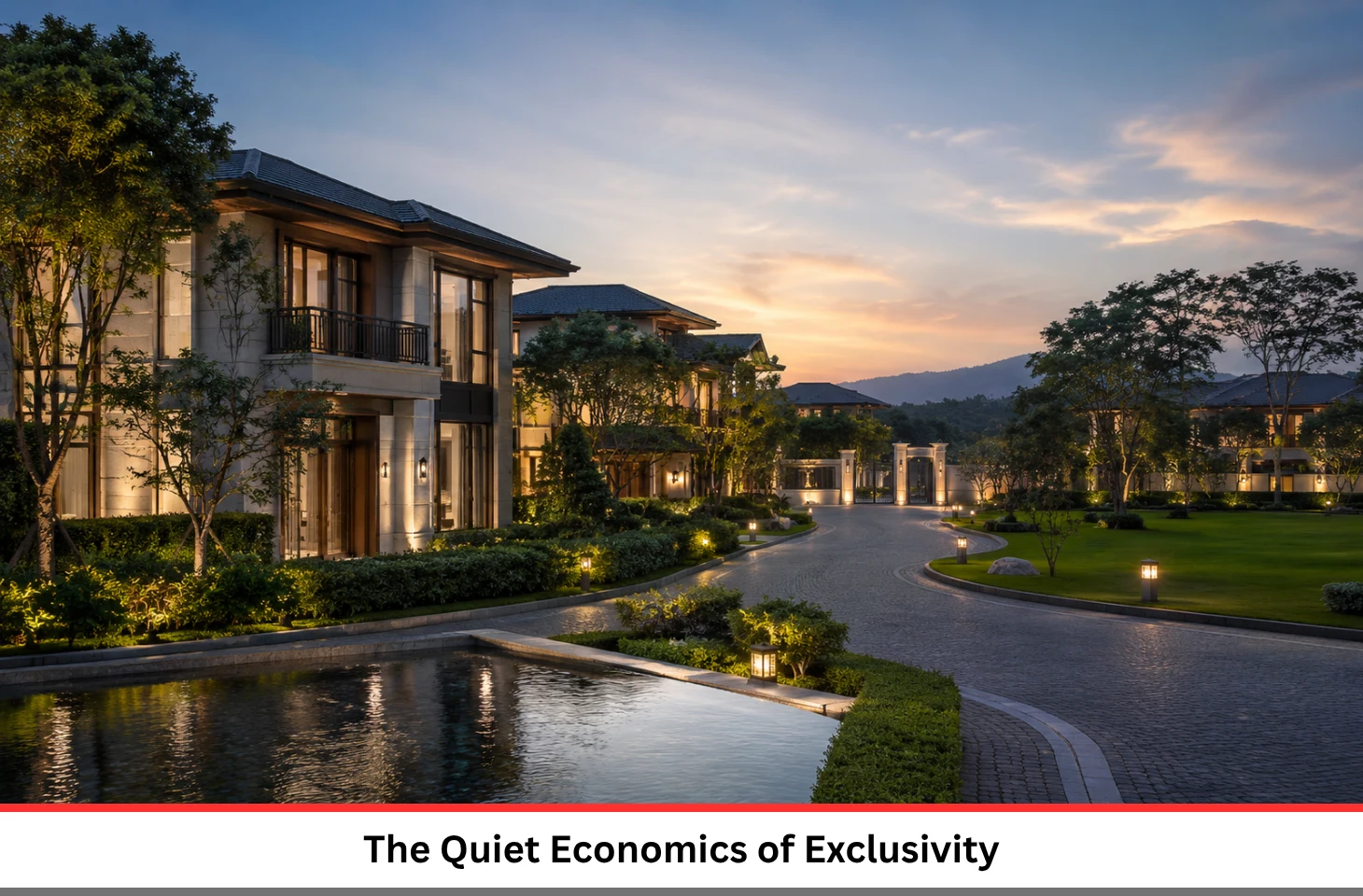
Sceptics sometimes frame privacy as an indulgence. The resale market disagrees. Because genuinely low-rise, high-green projects remain rare, they trade at a premium and hold value through market cycles better than commodity apartments. Analysts tracking India's premium segment describe current demand as end-user driven and structural rather than speculative, the healthiest kind of foundation a property class can have. Buyers live in these homes, pass them to children, and release them to the market reluctantly. Thin resale supply does the rest.
Marketing brochures adore words like exclusive, so verify the substance behind them:
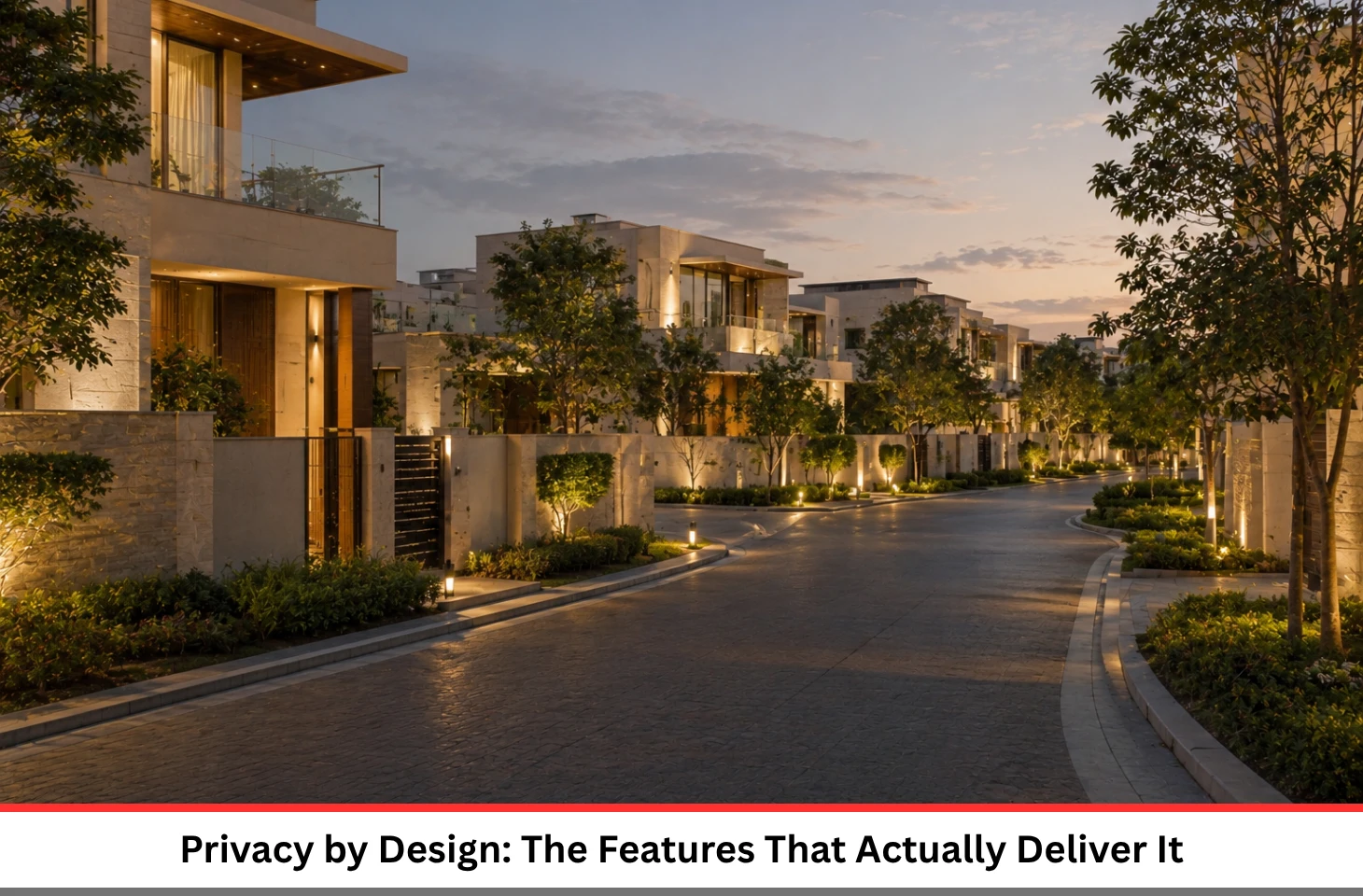
Seclusion is engineered long before it is experienced, and the best developers design it into the master plan itself. Five elements do most of the work.
Independent walls come first. When every wall belongs to one family alone, sound transfer between homes drops to zero and the loudest thing you hear at midnight is the ceiling fan. Staggered orientation comes next: villas angled away from one another so that windows open onto gardens rather than into a neighbour's living room. Buffer landscaping does quiet, constant duty, with tree lines and level changes absorbing sound and interrupting sightlines across the estate.
Then come the personal territories. A private lawn, courtyard or terrace gives each household a patch of open sky reserved for itself alone, turning morning tea and evening walks into solitary pleasures rather than public appearances. Finally, internal road planning keeps vehicular movement to the edges, so the heart of the community stays walkable, hushed and safe. Judge any premium project against these five, and its brochure adjectives will either stand or fall.
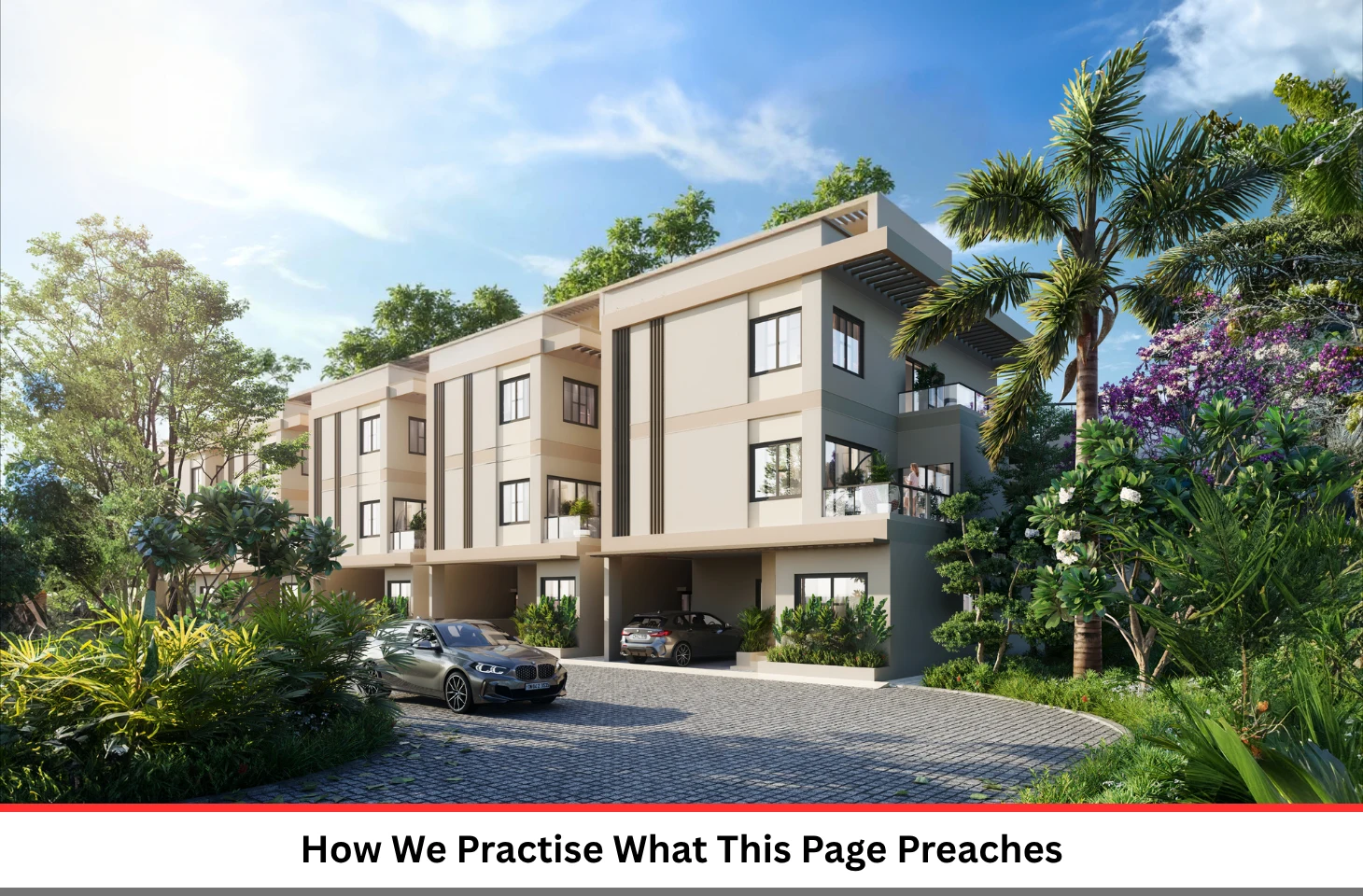
We arrived at these convictions the practical way, by building around them. At Shubhashish Forest on Jaipur's Ajmer Road, resort-style 4BHK villas stand amid expansive greens where every wall belongs to a single family, so luxury villa living comes with the rarest amenity of all, true acoustic solitude.
Across our communities, layered security, generous landscaping, solar-powered essentials and four decades of on-time delivery back the quiet we promise. We build fewer homes per acre on purpose, because the space between them is what our residents are really buying.
Every era crowns its own status symbol. Once it was the address closest to the action; today it is the address the action struggles to reach. As India's cities grow louder and denser, the ability to close a gate on the noise will only appreciate, in comfort and in capital terms alike. If that sounds like the life you have been working toward, come spend an evening inside one of our communities. Stand on the lawn, listen to the silence, and decide for yourself whether privacy is worth its price.
Reach out to our team, and let us open the gate. Call +91-741-399-0099 to plan a site visit.

 Enquiry
 Call
Call Whatsapp
 Contact us