29 Jul 2025 / Subhashish Homes
Your Ultimate Guide to Carpet Area Built-Up Area & Super Built-Up Area
When setting out to buy a luxury home in Jaipur, you’ll quickly discover that area measurements - carpet area, built-up area, and super built-up area—are more than just numbers on a brochure. They determine how spacious your living room will feel, how much you’ll pay, and even how your investment ages over time. Picture this: you’re excited about a 1,200 sq ft apartment, only to realize that your actual usable space is hardly 900 sq ft once walls and balconies are accounted for. That gap can turn your dream home into a cramped compromise.
Understanding these terms puts you in control. Carpet area tells you the true, live-in space; built-up area adds the thickness of walls and any private balconies; and super built-up area factors in your share of common facilities, from lobbies to gardens. Knowing exactly what each metric includes helps you compare projects fairly, negotiate better prices, and avoid unwelcome surprises at possession. In this blog, we’ll break down each of these measurements in simple terms, guide you through the calculation methods, and share practical tips to ensure that every square foot you pay for adds real value to your life.
Whether you’re a first-time buyer or a seasoned investor, these insights will help you navigate the maze of real-estate jargon with confidence, turning a potentially stressful process into a transparent, empowering journey.
Carpet Area: The Core Living Space
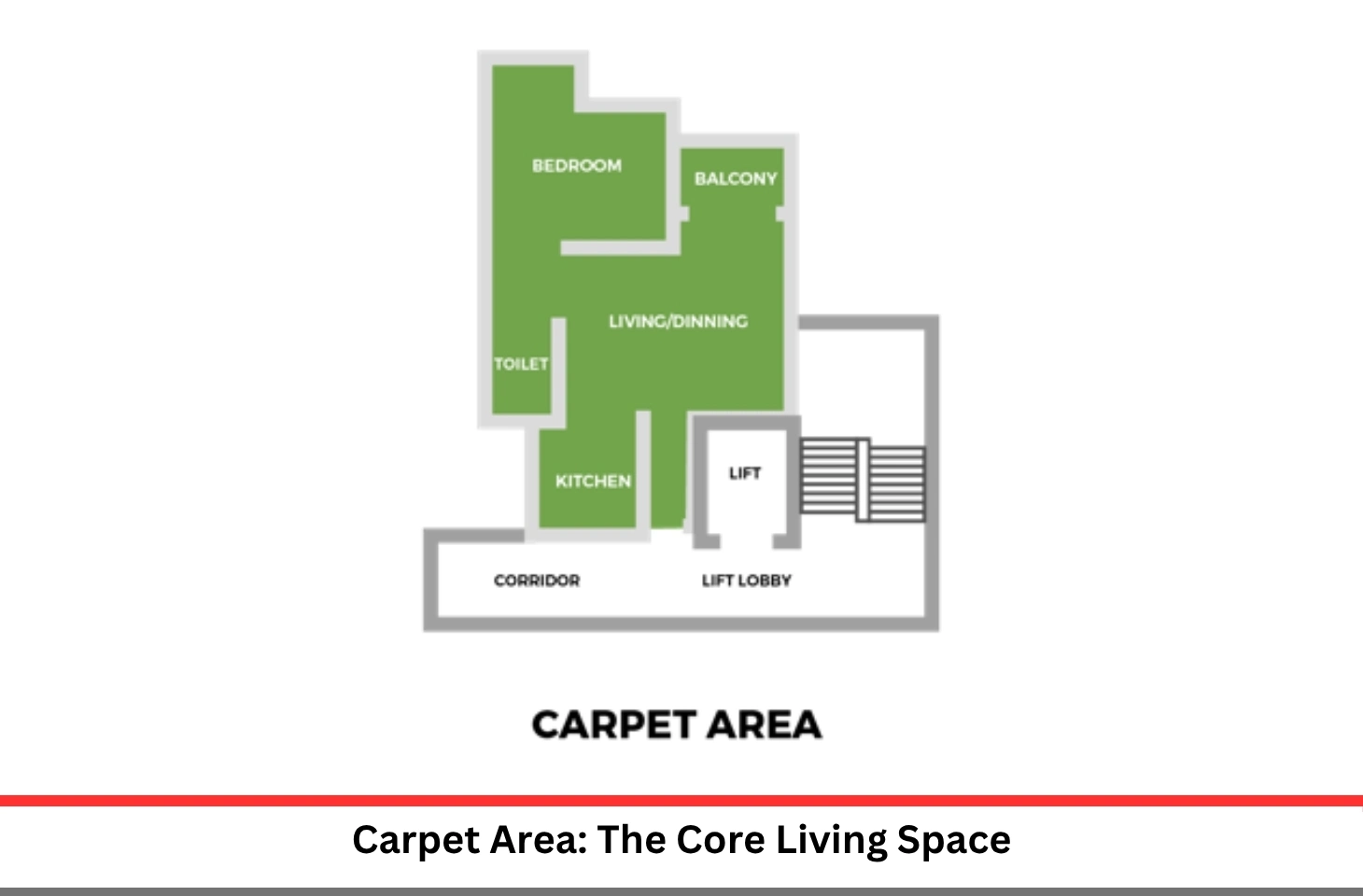
Carpet area refers to the actual, usable floor space within the walls of your home. Imagine rolling out a carpet in your living room—that exact space where you can place furniture, walk around freely, and truly call “home.” It excludes the thickness of walls, columns, shafts, and balconies.
- Why it matters: Carpet area directly impacts your everyday comfort. When you plan your furniture layout, assess storage options, or visualize family gatherings, this is the figure you’ll rely on.
- What to look for: Always ask developers to specify carpet area on plan documents. After all, no one wants to discover that a promised “1,000 sq ft” home really offers only 850 sq ft of usable space.
- Regulatory protection: In many regions, real-estate authorities require that builders advertise based on carpet area, ensuring that buyers aren’t misled by inflated figures.
Read More Here: Why More Buyers Are Prioritizing Homes with Wellness Amenities Like Yoga Decks
Built-Up Area: Including the Structure
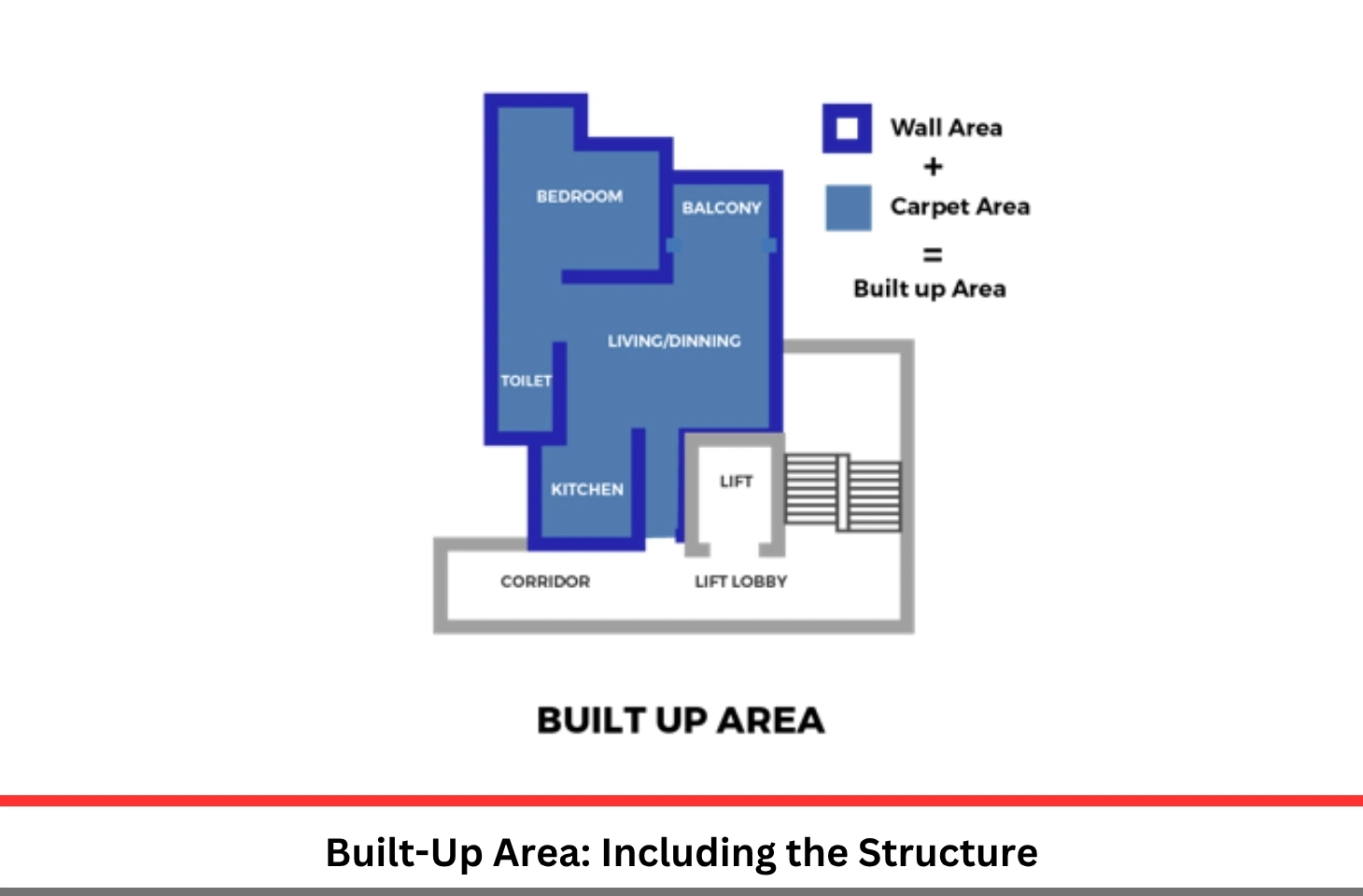
Built-up area builds upon carpet area by adding the thickness of internal and external walls, plus private balconies and terraces. Think of it as the footprint your home occupies, including the structural elements that support it.
- Typical loading: Generally, built-up area is around 10–15 percent higher than carpet area. For a 1,000 sq ft carpet area, expect a built-up area of roughly 1,100 to 1,150 sq ft.
- Visualizing the difference: Picture your walls as wrapping paper around a gift. The gift is the carpet area; the paper adds volume. This helps you gauge the true size of rooms once all boundaries are in place.
- Why it’s useful: While it still excludes shared common spaces, built-up area gives you a clearer idea of your home’s actual physical dimensions and helps you plan for fixtures like false ceilings, cabinetry, and cladding.
Super Built-Up Area: Sharing Amenities
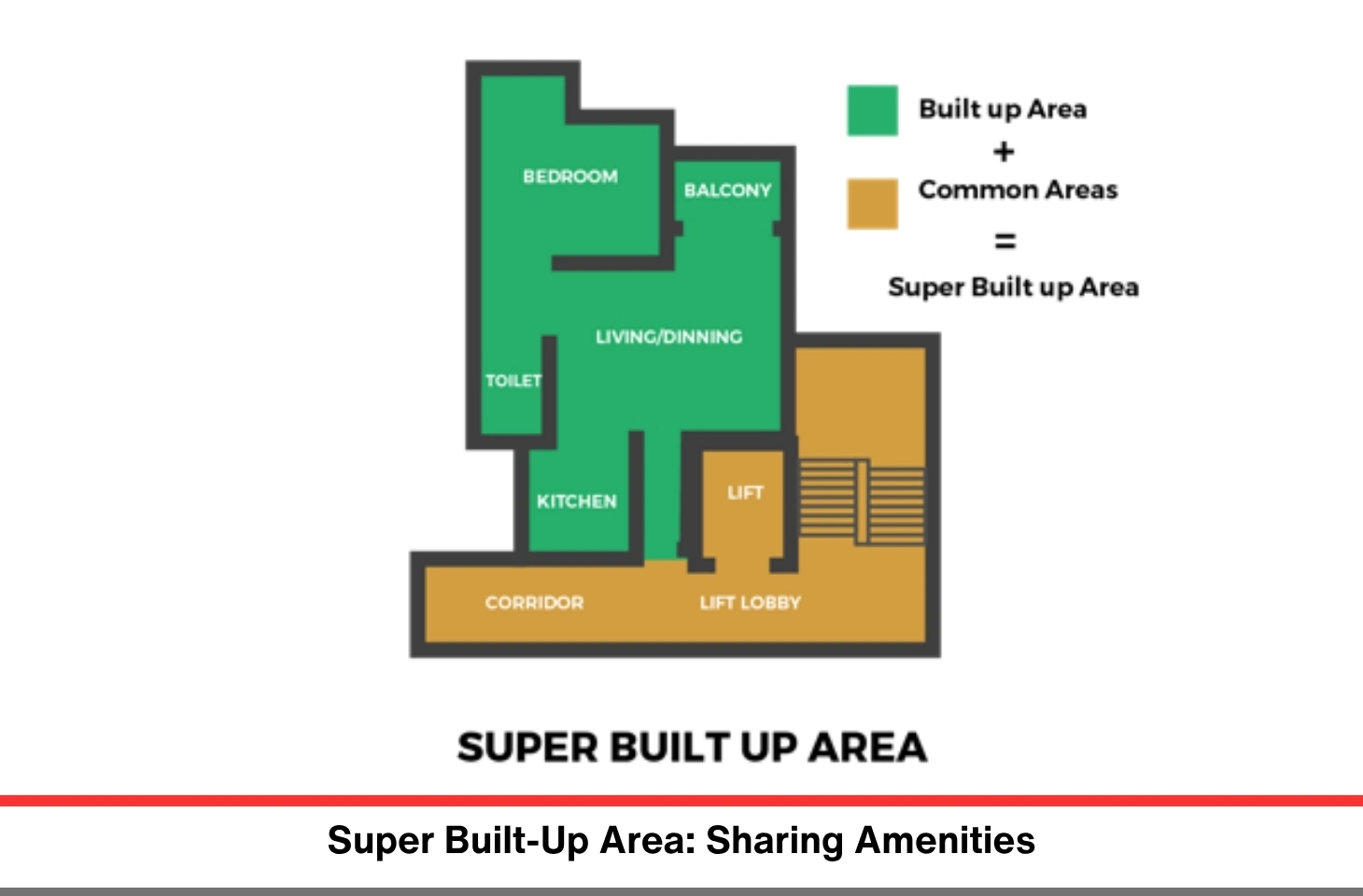
Super built-up area - often called saleable area - includes built-up area plus a proportionate share of common amenities: lobbies, corridors, staircases, lifts, gardens, clubhouses, and more. Developers use this figure to price your apartment, distributing the cost of communal infrastructure evenly among all residents.
- Typical loading factor: This can add anywhere from 25 to 30 percent extra space on top of built-up area. In upscale developments, the loading factor can rise to 40 percent or more.
- Sample calculation: If your built-up area is 1,200 sq ft and the loading factor is 30 percent, your super built-up area becomes 1,560 sq ft (1,200 × 1.30).
- What you’re paying for: While these shared spaces enhance lifestyle and convenience, you rarely use every facility equally. Being aware of the loading factor helps you assess whether you’re comfortable with the communal premium you’re paying.
Don’t Miss: How Multi-Tier Security Systems Are Transforming Residential Safety Standards in India
Why Understanding These Metrics Matters
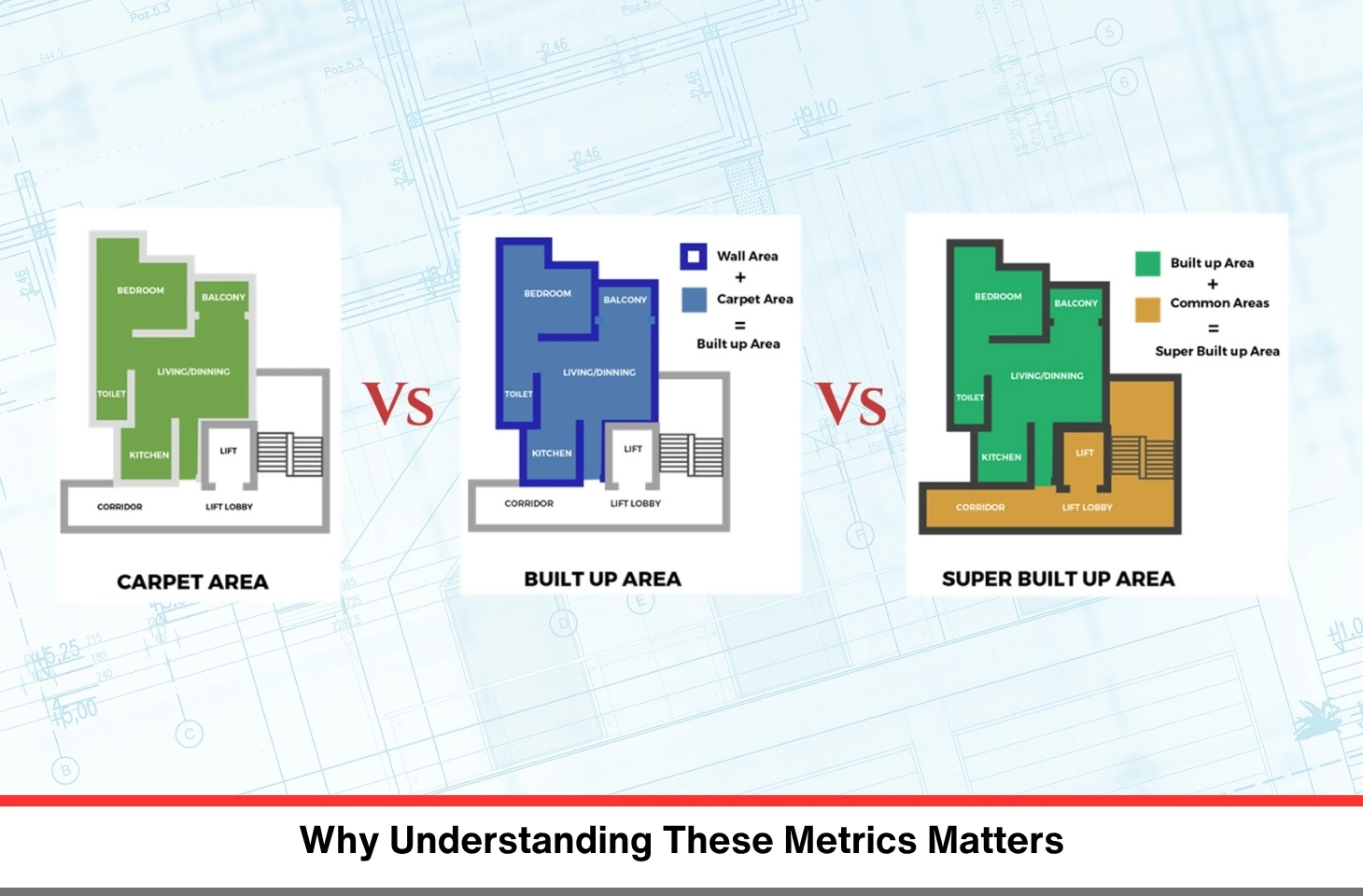
Grasping the differences among carpet, built-up, and super built-up areas empowers you to:
- Compare apples to apples: Don’t be swayed by a “2,000 sq ft” number if it refers to super built-up area. Focus on carpet area to see which home truly offers more usable space.
- Negotiate better: When you anchor discussions on carpet area, you push back against inflated prices based on super built-up figures. Sellers often quote the highest number first; flip the narrative by zeroing in on what matters.
- Budget accurately: Real-estate prices in major Indian cities range from ₹6,000 to ₹15,000 per sq ft, depending on location and amenities. A 10 percent miscalculation can cost you lakhs of rupees.
- Plan for the future: Resale value and rental yield hinge on carpet area, as tenants and secondary buyers care most about usable living space.
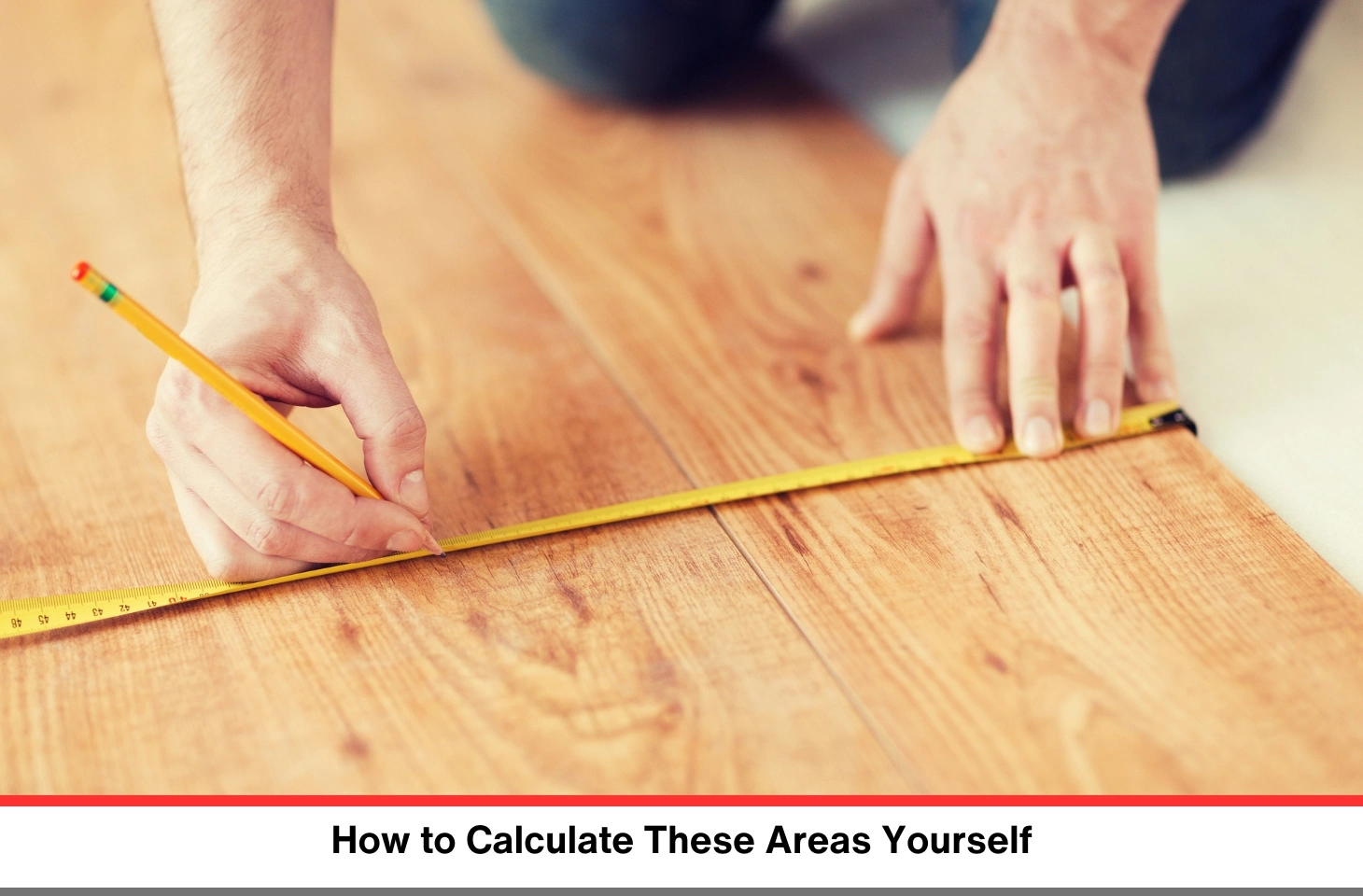
How to Calculate These Areas Yourself
- Measure each room
- Record length and breadth of bedrooms, living room, kitchen, and bathrooms.
- Multiply length by breadth for each and sum up.
- Compute built-up area
- Take the total carpet area and add 10–15 percent for wall thickness and balconies.
- Determine loading factor
- Loading factor = (Super built-up area – Carpet area) ÷ Carpet area.
- Cross-check with plans
- Always verify your calculations against the developer’s detailed floor plans to catch any discrepancies early.
Practical Tips for Homebuyers

- Request detailed layouts: Insist on floor plans that clearly mark carpet, built-up, and super built-up areas.
- Focus on carpet area: Keep your negotiations grounded in usable living space, not inflated super built-up figures.
- Aim for reasonable loading: A loading factor below 40 percent in premium developments is generally acceptable. Anything higher may indicate an overly slim net living area.
- Compare multiple projects: Use carpet area as your yardstick. A project offering 1,000 sq ft carpet area at a lower per-sq ft rate beats one quoting 1,300 sq ft super built-up area at the same price.
- Seek professional validation: If in doubt, hire a chartered engineer or architect to independently measure and confirm the areas before signing any agreement.
Transparency at the Core: Shubhashish Homes’ Vision and Mission
Shubhashish Homes was founded on the belief that clarity and honesty form the cornerstone of every lasting relationship. Our vision is to redefine premium living by delivering : spacious homes in Jaipur that perfectly balance luxury with transparency. From the moment you step into our sales office, we share full details of carpet, built-up, and super built-up areas, ensuring you understand exactly what you’re investing in.
Our mission revolves around educating and empowering homebuyers. We host interactive workshops, publish detailed guides, and provide one-on-one consultations to demystify real-estate terminology. Internally, our teams abide by the highest compliance standards, strictly following RERA norms and best architectural practices. By embedding openness into every phase - planning, construction, sales, and handover - we transform the home-buying process into an experience marked by trust and confidence.
When you choose Shubhashish Homes, you’re not just acquiring a property; you’re gaining a partner committed to upholding integrity at every turn. Our transparent approach ensures you enjoy every square foot you pay for, making your journey to a dream home as rewarding as the destination itself.

 Enquiry
 Call
Call Whatsapp
 Contact us